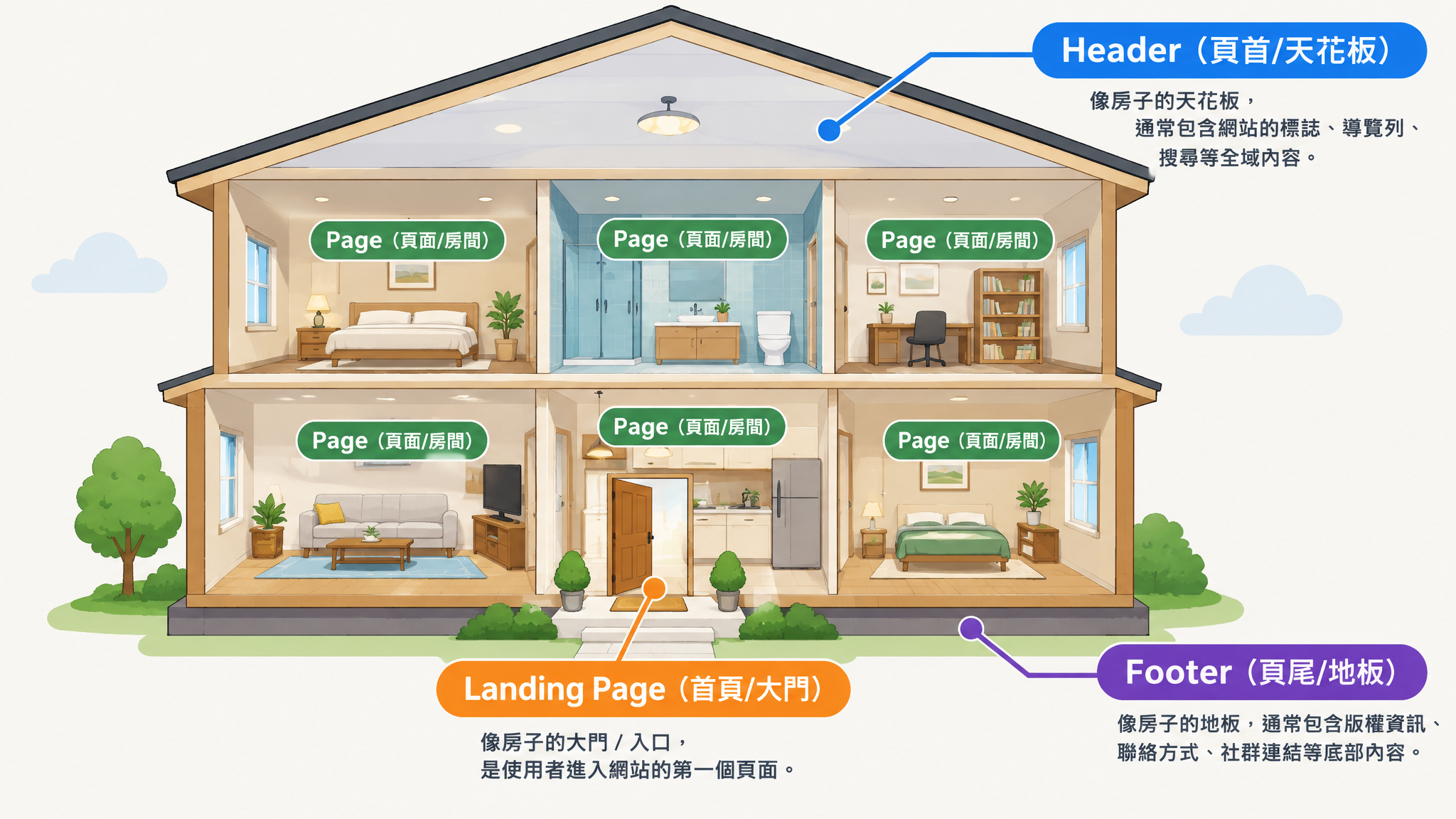

If you want more organic traffic, the first step is not to rush into writing articles, but to find the right Google keywords.
Whether you are doing SEO, running Google Ads, or managing social channels such as Instagram, Threads and YouTube, your first priority is to understand how your target audience finds you.
What do they type into Google to find your website? If you cannot answer this question, you are not ready to start a business.
This guide explains what Google keywords are, research tools and selection methods, and how to use keywords for both traditional SEO and GEO.
Many companies write high-quality articles but never rank for Google keywords because they do not follow an SEO-friendly format. When you build a website with CMINI, its AI agent can help create articles in an SEO-friendly format or reorganize existing content for SEO and GEO.
What Are Google Keywords?
Google keywords are words or phrases users enter when searching Google for products, services or information. They are also called search terms or search queries.
Keywords also apply to platforms such as YouTube, Yandex and Naver. A keyword reflects the searcher’s intent.
For example, someone planning to build a website might search for:
- free website builder
- recommended AI website builders
- Wix website costs
- recommended web design agencies
- how to create a company website
These keywords are more than words: they reflect the problems users want to solve.
Keyword Research: What Is Your Customer’s Search Intent?
Using Dr. Lin Liang’s Moon Dermatology Clinic as an example, keyword analysis can answer three important questions:
1. Define the Target Audience’s Journey: What Are Customers Looking For?
Stage A (beginner): They know little about the subject and want to learn how to remove facial sunspots.
Stage B (learning): They have some basic knowledge and know laser treatment may be an option, but do not know which laser brand to choose.
Stage C (purchase): They have chosen Discovery Pico and want to know which dermatology clinics offer the treatment.
2. Are Customers Learning, Comparing or Ready to Buy?
To choose effective keywords, put yourself in customers’ shoes and understand their concerns and pain points.
Stage A: They may simply want to know what sunspots are.
Stage B: They may want to know what treatments are available and whether there are side effects.
Stage C: They are ready to purchase and may ask which clinic’s laser treatment is effective, then compare clinic reviews and prices.
3. What Content Can Make Your Website the Best Answer?
By focusing on your audience’s concerns and search keywords, you can infer what they will type into Google and start planning your keyword strategy.
Google keyword research is not simply finding the terms with the highest search volume; it is identifying needs with genuine business value in search data.
The same subject can involve several intents. Someone searching for “sunspots” may only want a definition, while someone searching for “Discovery laser clinic” or “picosecond laser price” may be closer to buying.
If a website pursues search volume without considering intent, rankings alone may not bring useful inquiries or orders.
Informational: exploring solutions
- sunspot removal
- difference between sunspots and melasma
- aesthetic treatments for sunspots
Investigational: comparing solutions
- Discovery vs. PicoSure 755 vs. Pico Plus laser
- PicoSure 755 benefits and results
- skin-rejuvenation laser vs. picosecond laser
- Discovery laser drawbacks and side effects
Transactional: comparing prices and preparing to purchase
- picosecond laser price
- recommended PicoSure 755 clinics
Navigational: finding a specific brand
- Moon Dermatology Clinic laser
- Dr. Lin Liang reviews
How to Find Google Keywords
Use the following four methods to find Google keywords.
1. Use Google Keyword Planner
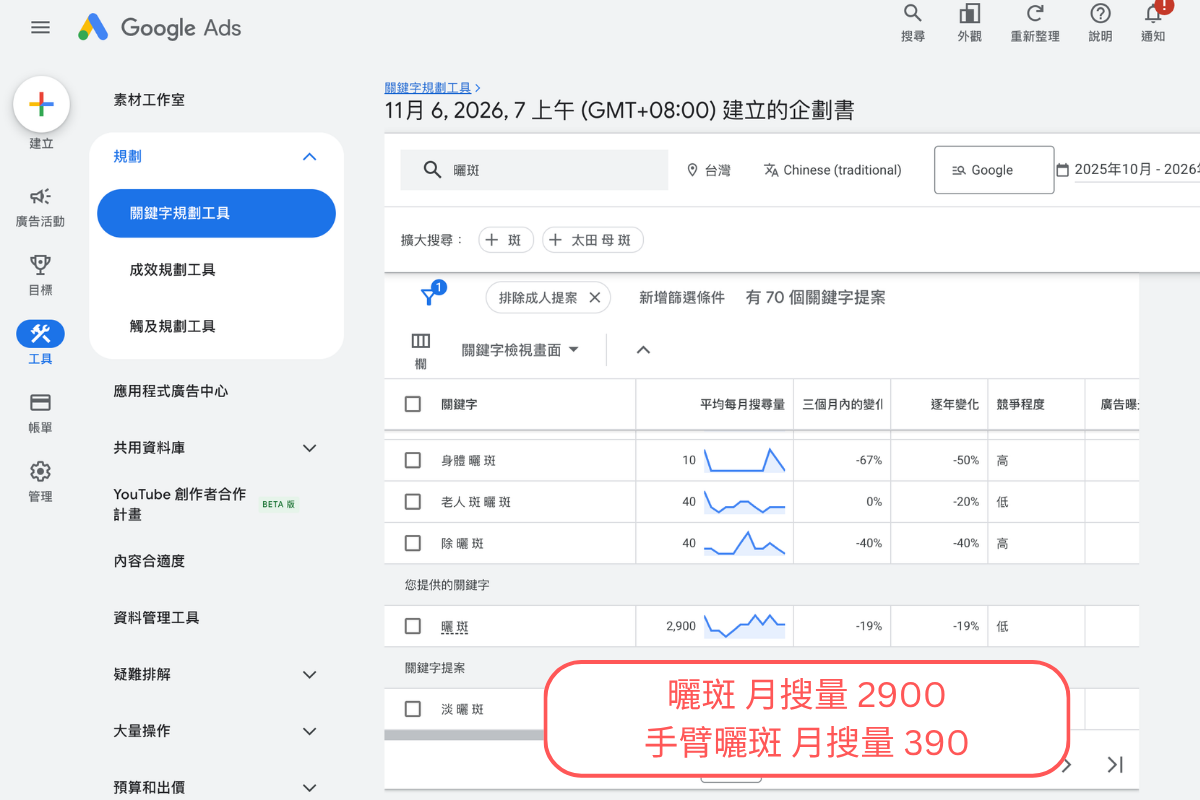
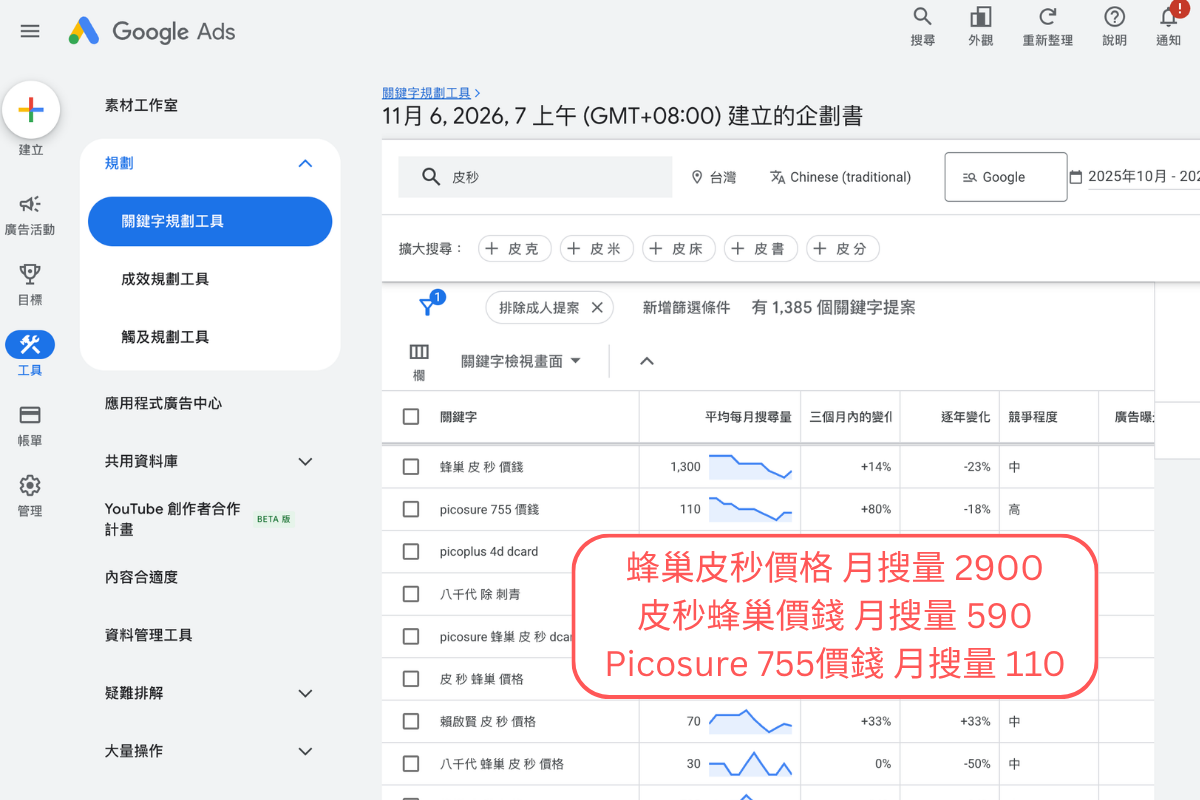
Google Keyword Planner is a keyword research tool provided by Google Ads.
After signing in to Google Ads, select Tools and then Keyword Planner. Enter product or service keywords or a competitor’s website address to see estimated monthly searches for your terms and related keywords.
For example, “sunspots” has 2,900 monthly searches, “honeycomb picosecond laser price” has 1,300, and “PicoSure 755 price” has only 110 in the original example. The last query is closer to a purchasing decision and may face less competition and produce more qualified conversions. These figures refer to the original Chinese searches, not necessarily their English translations.
You can use it to:
- Discover keyword ideas
- Check average monthly searches
- Understand advertising competition
- See top-of-page bid ranges and estimate advertising costs
- Filter by country, region and language
- Estimate keyword advertising performance
Keyword Planner is primarily an advertising planning tool. Its competition metric reflects competition among advertisers, not organic SEO difficulty. Low advertising competition does not necessarily mean an organic ranking will be easy.
Google currently requires users to complete Google Ads account setup and enter billing information to access basic keyword ideas. Official Google Keyword Planner guidance
2. Use Google Search Suggestions
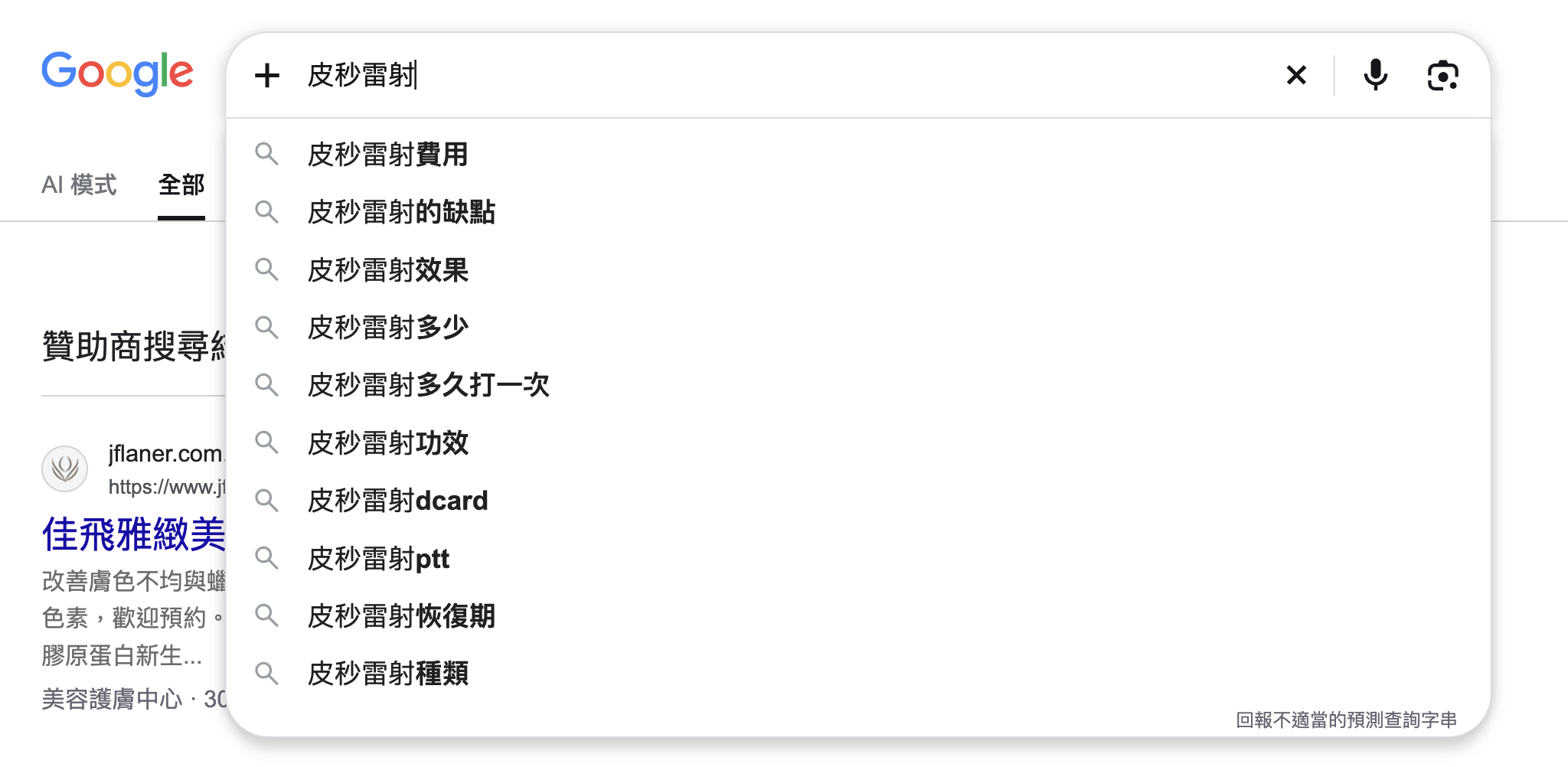
The simplest approach is to enter a core keyword in Google’s search box and review the related suggestions that appear.
For example, searching for “picosecond laser” may show:
- picosecond laser cost
- picosecond laser disadvantages
- picosecond laser results
- how often to get picosecond laser
- types of picosecond laser
These suggestions can reveal long-tail keywords and actual questions from users.
“People also ask” and “Related searches” on the results page can also show what else people want to know about a topic.
3. Track Trends With Google Trends
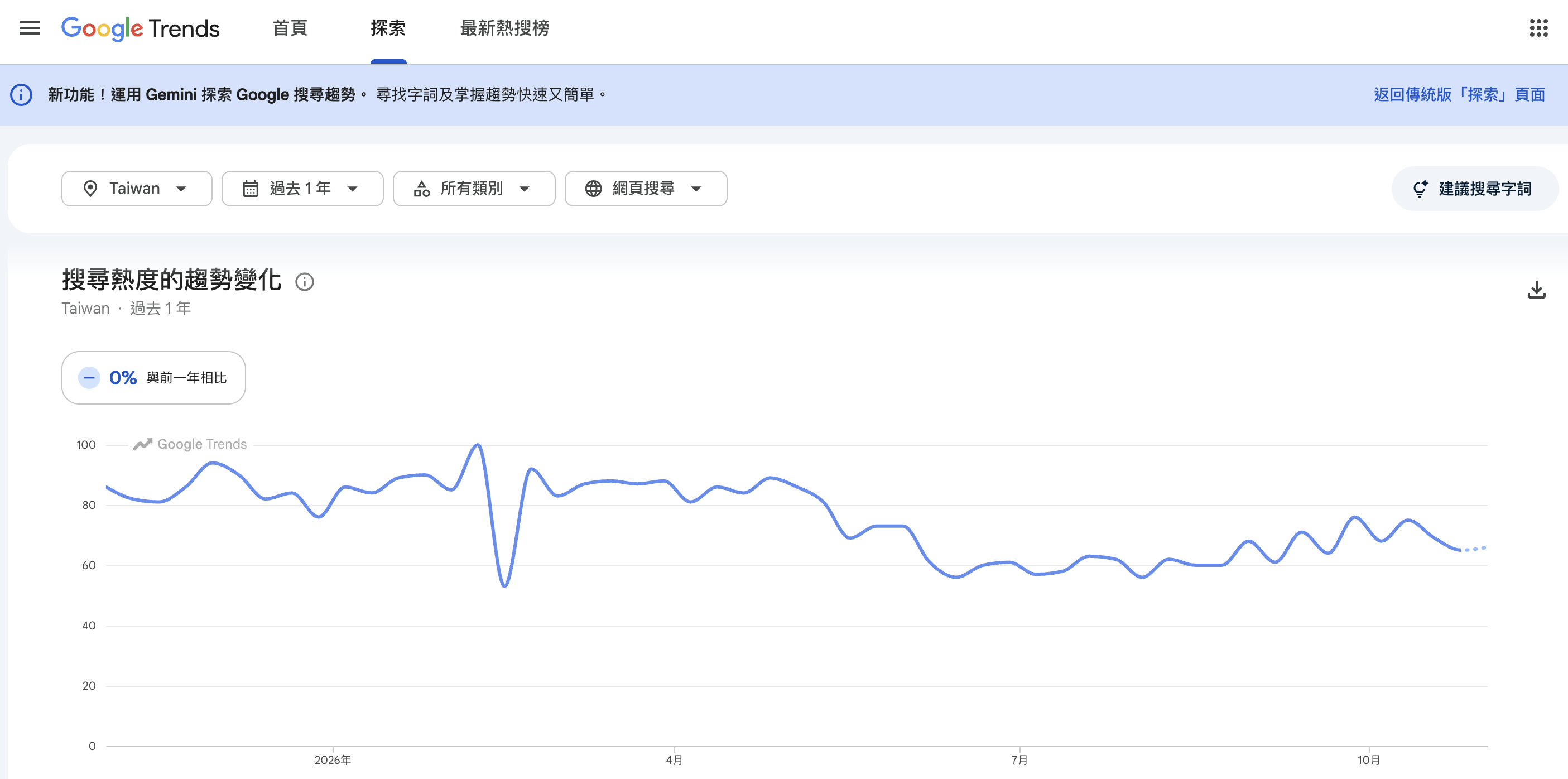
Google Trends compares relative interest in keywords across time, regions and platforms, and identifies popular and fast-growing related searches.
Google Trends shows normalized relative interest, not the actual number of searches. A value of 100 represents peak interest under the selected conditions, not 100 searches.
In the image, interest in picosecond laser over the past year is higher in winter and falls by half in June and July. The original article attributes this to the treatment’s recovery period making summer less suitable. Trends can help estimate demand and adjust the advertising budget for a keyword.
Google Trends also distinguishes between “search terms” and “topics”:
- Search term: analyzes the specific text users enter.
- Topic: encompasses different languages, spellings and related searches for the same concept.
Choose a search term to compare specific wording, or a topic to analyze interest in a broader concept. Official Google Trends guidance
4. Find Existing Opportunities With Google Search Console
Once your website is live, Google Search Console shows the queries through which people see or click your website.
The Search Console performance report includes:
- Impressions
- Clicks
- Click-through rate
- Average search position
- Queries generating impressions
- Better-performing pages, countries and devices
Prioritize keywords with high impressions, an established position and a low click-through rate. Google is already showing the page for these queries, and improving its title, description or answers may bring more traffic. Official Google Search Console guidance
How to Choose Google Keywords Worth Targeting
Evaluate keywords against these five criteria.
Does Search Intent Match Your Services?
Keywords should match the products, services and content the website actually provides.
For a company designing business websites, “business website design” may attract more relevant customers than “free website builder,” even if its search volume is lower.
Does Search Volume Indicate Demand?
Search volume helps estimate market demand, but it should not be the only criterion.
High-volume keywords tend to be more competitive and may have ambiguous intent. Low-volume long-tail keywords bring less traffic individually but can attract more relevant visitors.
Keyword Competition
Search the keyword and assess the brand size, content depth and page types currently ranking.
If government agencies, major media or international platforms dominate results, a new website may struggle to compete directly. Start with a more specific long-tail question.
Business Value
“What are Google keywords?” signals an informational need; “Google Ads management service” signals a clearer intent to hire.
Business websites should cover both informational and commercial topics, guiding users from initial research to comparison and inquiries.
Can Your Website Provide the Best Answer?
Do not choose popular keywords unrelated to your expertise merely to rank.
Real case studies, test data, expert experience and firsthand observations help businesses create original content worth citing. These are quality signals increasingly valued in Google and generative search.
How to Incorporate Google Keywords Into an Article
SEO articles require structure. Include the core keyword naturally in important places, including:
- SEO title
- H1 heading
- First 100 words of the introduction
- At least one H2 subheading
- URL slug
- Meta description
- Image alternative text
- Body text and FAQ
Do not repeat “picosecond laser” in every sentence. Keyword stuffing reduces readability and can be interpreted by search engines as an attempt to manipulate rankings.
Instead, naturally include semantically related terms so search engines and generative AI can understand the topic more fully.
- SEO title: Honeycomb vs. traditional picosecond laser: results, price and recovery
- H1: How does honeycomb picosecond laser differ from traditional picosecond laser?
- H2 example: Honeycomb picosecond laser results: fading spots and tattoo removal
- Meta description: Honeycomb picosecond laser can fade spots and remove tattoos. The laser uses a photoacoustic effect to break pigment into smaller particles that the body naturally clears; it may be used for sunspots, freckles, age spots and melasma.
- FAQ: How long is the recovery period? How often is treatment needed?
How Can Google Keywords Be Used for GEO?
GEO stands for generative engine optimization. It aims to make content easier for Google AI Overviews, AI Mode and other generative AI search tools to understand, use and cite.
GEO does not mean abandoning SEO or stuffing an article with keywords supposedly favored by AI.
Google says existing SEO best practices apply to AI Overviews and AI Mode; sites do not need a special AI text file or dedicated schema. Pages must first be indexable and eligible to appear with snippets in ordinary search results. Google’s AI search features guidance
For a topic such as Google keywords, the following GEO approaches can help:
Provide Answers That Stand Alone
Answer the question directly at the start of each section, then add an explanation.
For example:
Google keywords are words or questions users enter into Google’s search box, reflecting their information needs, comparisons and purchase intent.
This answer remains clear and complete without surrounding context, making it easier to summarize.
Use Question-Based Headings
Use natural-language questions users may ask as H2 or H3 headings, for example:
- What are sunspots?
- Can skincare products help with sunspots?
- How many laser sessions are needed for sunspots?
- How much does sunspot treatment cost?
This can address both traditional keyword searches and conversational AI queries.
Provide Comparison Tables and Clear Steps
Tables, definitions, processes and conditional recommendations are easier for search systems to interpret than vague marketing copy.
For example, instead of merely saying “use the right tools,” explain:
- Keyword Planner: find keyword ideas and advertising data.
- Google Trends: compare relative trends.
- Search Console: see queries generating impressions for your site.
- Google search suggestions: discover long-tail questions.
Include Firsthand Experience and Sources
Simply rewriting other websites makes differentiation difficult. Consider adding:
- Screenshots of actual use
- Customer case studies
- Impression data before and after keyword optimization
- Conversion rates in your industry
- Expert commentary
- Research methods and update dates
Google warns that mass-produced generative AI pages that add no value may violate its scaled content abuse policy. AI can assist research and structure, but final content should include original information, expert judgment and fact-checking. Google guidance on generative AI content
Common Google Keyword Research Mistakes
Choosing Only the Highest-Volume Terms
High search volume does not necessarily mean a keyword meets your business needs. For a small business, a lower-volume keyword with clear purchase intent may bring more orders than a broad popular term.
Targeting Too Many Different Intents in One Article
A page trying to answer definitions, tutorials, prices, brand comparisons and agency services at once can lose focus. Organize different intents into topic clusters and connect them with internal links.
Confusing Advertising Competition With SEO Difficulty
Keyword Planner competition primarily reflects competition among Google Ads advertisers, not the difficulty of ranking organically.
Publishing AI-Generated Keyword Content Without Review
Generative AI can invent search volumes, provide incorrect data or use outdated feature names. Verify figures in Keyword Planner, Search Console and official sources.
Failing to Update After Publication
Keyword popularity, search results and user questions change. Review Search Console every three to six months and update emerging questions, outdated information and underperforming sections.
Google Keyword FAQ
Is Google Keyword Planner Free?
The tool itself has no separate usage fee, but basic keyword ideas currently require a Google Ads account and completed billing setup. Advertising charges arise when ads actually run.
Are Google Keyword Search Volumes Accurate?
They are useful for assessing relative demand, but should not be treated as exact search counts. Region, language, date range, grouping of similar terms and account status can affect the figures.
Does Repeating a Keyword More Often Improve Rankings?
No. Include keywords naturally in titles, introductions, subheadings and relevant paragraphs. Excessive repetition harms readability and cannot replace content quality, authority, links or technical SEO.
What Is a Long-Tail Keyword?
A long-tail keyword is a more specific phrase with clearer intent, such as “Google Ads management for small businesses in Taipei.” Individual search volume is usually lower, but competition may be lower and conversion intent clearer.
Will GEO Replace SEO?
No. GEO extends SEO into generative search. A site still needs to be crawlable, indexable, clearly structured and reliable to have a chance of appearing in AI Overviews, AI Mode or other generative answers.
Conclusion: Understanding Users Is at the Heart of Google Keyword Research
The goal is not to stuff popular words into articles, but to understand what users ask, why they search and what they want to do next.
An effective strategy combines Keyword Planner market data, Google Trends, real website performance in Search Console and your own expertise. Content should offer clear answers, reliable sources, original information and a readable structure.
When content genuinely solves a user’s problem, it has a better chance of earning organic Google rankings and being used or cited in generative search.